
Art showing the science on arctic amplification. Use authorised by Alisa Singer, Environmental Graphiti. © 2022. All rights reserved. Further Information here.
Doctoral research
My research under the working title ‘The Legitimacy of Science Policy Interfaces’ allows me to think about philosophically and politically interesting questions of how politics and knowledge should institutionally be brought together. These theoretical thoughts, however, are not detached from reality but are informed by participant observation of important science policy interaction at the international level, namely the COP 26, the SBs 55 as well as the IPBES Plenary 2022 and contribute to a theoretical framework. This framework will be tested empirically in the context of urban climate resilience in the four study locations of the One Health and Urban Transformation Graduate School, namely the metropolitan areas of Accra (Ghana), Ahmedabad (India), the Rhine-Ruhr Metropolis (Germany) and São Paulo (Brazil).
By working on better linking knowledge with policy making processes I am convinced that my research is highly relevant for tackling the multiple challenges we are facing in today’s world.
My doctoral supervisors are Prof. Anna Katharina Hornidge (Director of IDOS, University of Bonn) and Prof. Thomas Dietz (University of Münster). Further Information about my doctorate and the One Health Graduate School can be found here.
Publications (academic and non-academic)
Wagner, Niklas (2023), The Importance of a Legitimate Global Stocktake of the UNFCCC, Poster at SB 58 of the UNFCCC, https://unfccc.int/sites/default/files/resource/Global%20Stocktake%20GST%20UNFCCC%20%20Poster%20NW.pdf
Wagner, Niklas; Velander, Sara; Biber-Freudenberger, Lisa and Dietz, Thomas (2023), Effectiveness Factors and Impacts on Policy Making of Science-Policy Interfaces in the Environmental Sustainability Context, Environmental Science & Policy, 140, 56–67. https://doi.org/10.1016/j.envsci.2022.11.008
Wagner, Niklas; Velander, Sara; Biber-Freudenberger, Lisa and Dietz, Thomas (05/2021), Science Policy Interfaces (SPIs) in the Sustainable Development Context, Poster Presentation at the IPBES Stakeholder Days, available at https://www.youtube.com/watch?v=FYal45L-soI&ab_channel=NiklasWagner
Wagner, Niklas and Dhorajiwala, Sakina (08/2019), Consent to nothing: Aadhaar-based payment systems in welfare, Blog Post at Ideas for India: For more Evidence Based Policies, available at https://www.ideasforindia.in/topics/governance/consent-to-nothing-aadhaar-based-payment-systems-in-welfare.html
Wagner, Niklas; Dhorajiwala, Sakina and Drèze, Jean (05/2019), A Bridge to Nowhere, Newspaper Article, available at https://www.thehindu.com/opinion/lead/a-bridge-to-nowhere/article62110043.ece
Teaching
Despite being enthusiastic about teaching, so far the opportunity has not presented itself too often unfortunately.
07/2022: Lecture on Human and Sustainable Development Master in Land use systems in the tropics and subtropics at the University of Bonn.
06/2022: Interactive Workshop on the Intergovernmental Panel on Climate Change (IPCC) during the Public Climate School of Fridays for Future Bonn.
09/2015-08/2016: Teaching Adults in Spanish and Mathematics in Primary School Level, Fundación Sabias Que Puebla IPB, Mexico.
My research interests are about how knowledge and power shape sustainability and environmental governance. Drawing on Science and Technology Studies, political sociology, and critical theory, I use qualitative methods including interviews and (collaborative) ethnography to study whose knowledge counts in sustainability decision-making.
Governing Adaptation Through the Global Stocktake
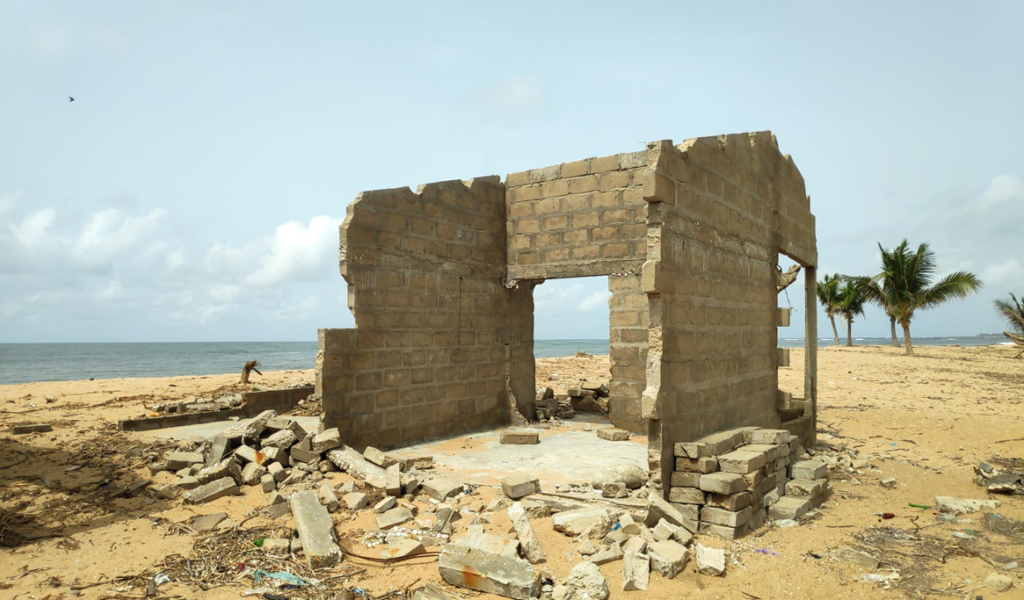
Embedded in the Klimalog Project of the German Institute for Development and Sustainability (IDOS), this project explores how climate adaptation was framed and negotiated within GST-1. Based on interviews and ethnographic work, it shows how adaptation was often treated as a measurable, managerial process, echoing debates around the Global Goal on Adaptation. These technocratic tendencies sidelined deeper political and justice-related dimensions of vulnerability. The research highlights how epistemic and structural power shape what counts as legitimate adaptation knowledge and action, and points to opportunities for more context-sensitive and just approaches in future global review cycles.
More information on the Klimalog Project can be found here.
Inclusivity Assessment of the UNFCCC's First Global Stocktake (GST)
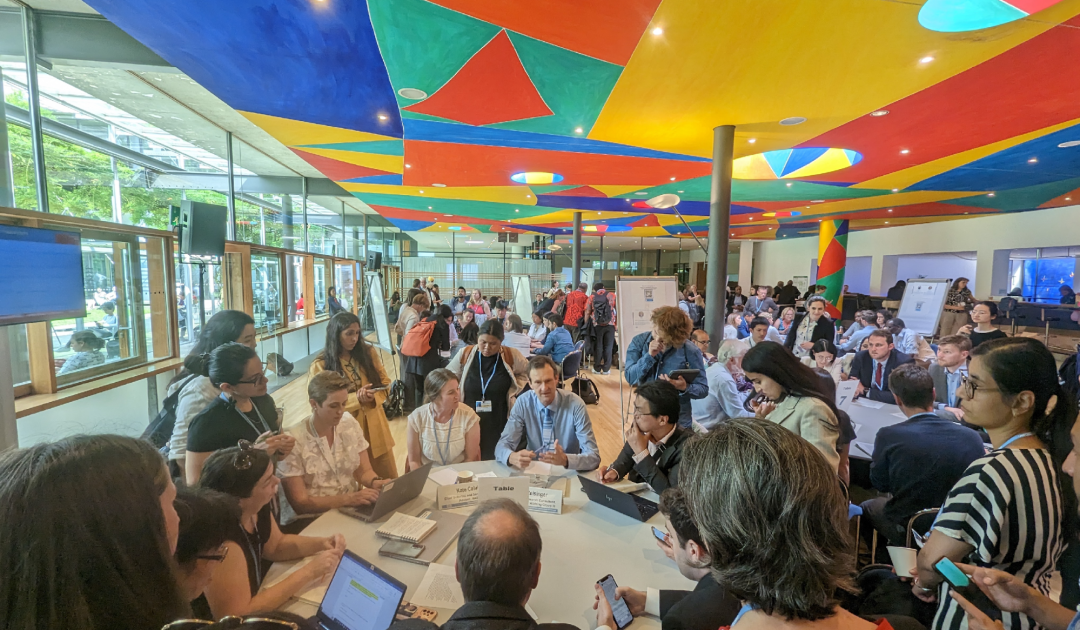
- Within the Project “Taking Stock of the First Global Stocktake of the Paris Agreement” at the University of Geneva, I study how the first Global Stocktake (GST-1) shaped participation and whose voices were able to influence the process. Using observations, interviews, and document analysis, this project examines inclusivity across different dimensions of power—from formal access to more hidden forms of agenda-setting and epistemic authority. While GST-1 opened new spaces for engagement, structural barriers and knowledge hierarchies continued to limit meaningful participation for many actors from the Majority world. The project highlights why genuine procedural equity requires confronting these power dynamics and identifies ways future GST cycles could become more inclusive.
More information about the project funded by the Swiss National Fund for International Studies SNIS can be found here.